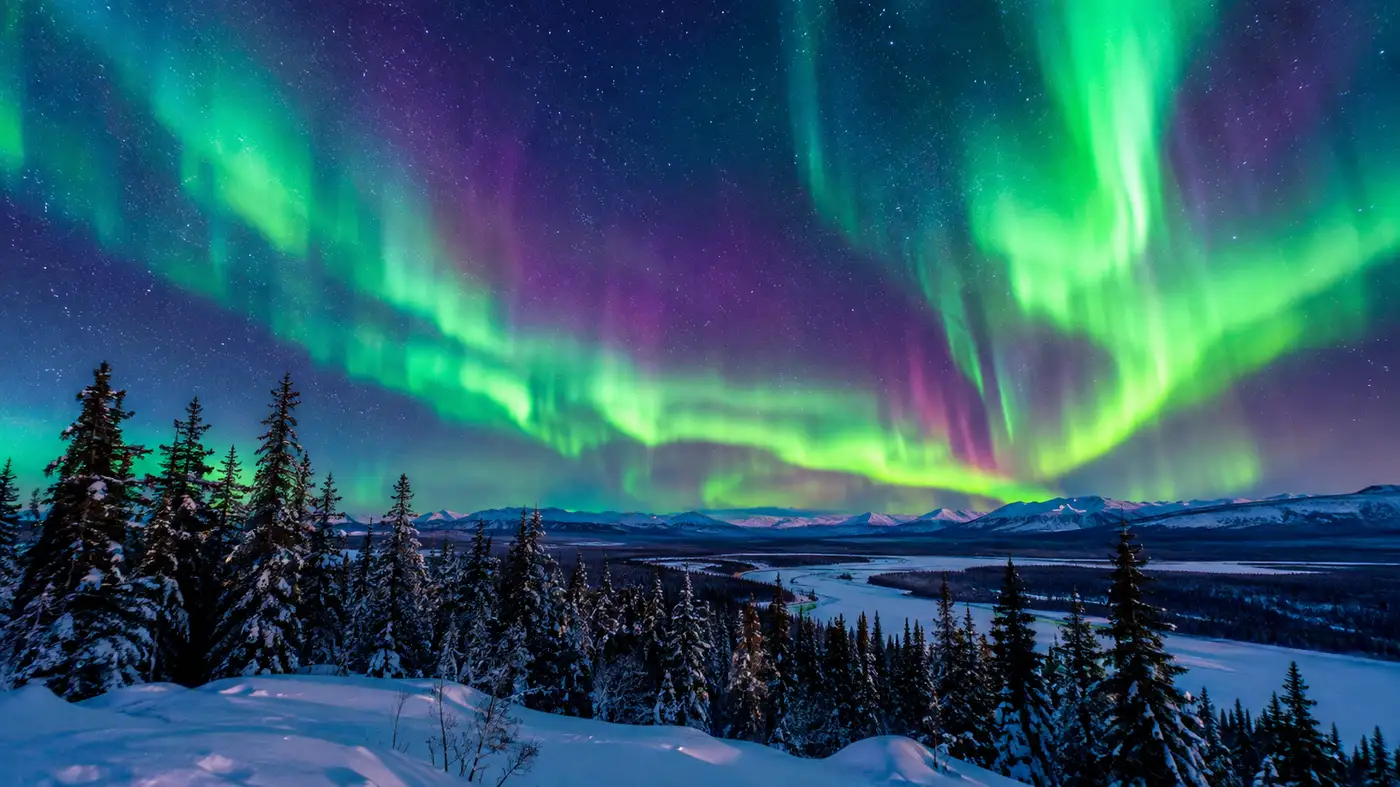
Fairbanks Northern Lights Live Cam and Aurora Webcams
My boots were still frozen to the floorboard of a rental SUV when I first learned to stop trusting my eyes and start trusting the feeds. It was 1:40 AM on Chena Hot Springs Road, negative eighteen degrees, and the sky looked like an empty bowl of black ink. My friend pulled up a fairbanks northern lights live cam on his cracked phone screen, squinting against the blue glow. Thirty miles west of where we sat shivering, the University of Alaska camera was showing an arch of neon lime burning right through the upper troposphere. We started the engine, drove twenty minutes toward the ridge, and walked straight into the show of a lifetime.
Checking live feeds changes how you hunt. If you are sitting on a couch in Chicago planning a trip, an online camera gives you a taste of reality without the frostbite. If you are already on the ground in the Interior, it is an essential survival tool that saves you from standing outside in sub-zero wind when nothing is happening. Between research institutes, backcountry lodges, and private cabins scattered along the hills, there are a handful of reliable lenses pointed up at the Arctic night. Here is how they work, where to find them, and how to tell the difference between actual space weather and low-hanging fog.
Book your fairbanks northern lights experience:
Top Fairbanks Aurora Cam Feeds You Can Watch for Free
Not all sky cams are built the same way. Some take a still frame every thirty seconds, while others pump out high-definition video that reveals auroral motion in real time. The standard across Alaska has long been the all-sky camera run by the Geophysical Institute at the University of Alaska Fairbanks. It sits on the West Ridge of campus, capped with a fish-eye acrylic dome. The image looks like a circular fishbowl of the entire sky from horizon to horizon, updated roughly every thirty to sixty seconds throughout the dark months.
Then you have color-sensitive cameras operated by private enthusiasts and wilderness lodges around Goldstream Valley and Cleary Summit. These rigs tend to focus on the northern horizon rather than a 360-degree all-sky angle. Because they point north, they catch faint sub-storms well before anything climbs overhead. If you want pristine scenery alongside your green ribbons, feeds from mountain lodges give you spruce silhouettes and ridge lines instead of bare university rooftops.
| Camera Name | Location | Feed Type | Best Used For |
|---|---|---|---|
| UAF Geophysical Institute All-Sky | UAF West Ridge | Still snapshots (refresh every 30-60s) | Checking total cloud cover across the entire dome |
| Poker Flat Research Range Cam | Chatanika (30 mi north) | Scientific stills & periodic video | Spotting faint activity before it hits town |
| Aurora Borealis Lodge Webcams | Cleary Summit area | Color stills / regular interval | True visual representation above the valley inversion |
| Explore.org Northern Lights Cam | Churchill / Subarctic network | HD continuous live video | Armchair viewing with real-time motion |
The Poker Flat feed is run by rocket scientists who literally launch probes into the aurora. When their cameras go wild, you know the magnetosphere is doing something serious. Their gear cuts through ambient light and isolates specific light wavelengths like 557.7 nanometers, which corresponds to excited atomic oxygen. It looks austere and scientific, but it does not lie.
Pro tip: Bookmark the university's color all-sky feed on your mobile home screen before you head north. Cell service drops out quickly on highway dips, but caching the page keeps your last clear reading accessible.
Why a Fairbanks Northern Lights Camera Beats General Weather Forecasts
Aurora apps rely heavily on solar wind data collected by satellites floating a million miles away at the L1 Lagrange point. That data is fantastic for general predictions, but it tells you nothing about the stubborn layer of freezing fog hovering four hundred feet over downtown Fairbanks. You can have a Kp index of 6 and still see nothing but gray soup from a hotel parking lot. You can check our detailed Fairbanks northern lights forecast to understand the planetary space metrics, but local cameras give you immediate ground truth.
Microclimates dominate this part of Alaska. The valley floor often sits under a temperature inversion that traps woodsmoke and ice crystals, while ridges just ten miles away enjoy clear, crystal-cold conditions under open stars. A quick look at a northern lights webcam fairbanks feed up on Murphy Dome or Haystack Mountain will tell you if climbing out of the valley is worth the icy drive.
- Spotting cloud altitude: If stars are sharp around the edges of the webcam frame, you have high, dry air ideal for chasing.
- Detecting the green band: Even during quiet geomagnetic conditions, a faint green arch often rests along the northern tree line on sensitive sensors.
- Monitoring moon wash: Live feeds reveal instantly whether a bright waxing moon will wash out faint ribbons or light up the snowy foreground beautifully.
I learned this lesson the hard way in 2022. The forecast apps were buzzing with alerts, so my group sat outside on an icy gravel bar near the Chena River for three hours. We saw nothing. When we finally checked the live aurora cam fairbanks feed from Cleary Summit, we realized a bank of stratus clouds had slipped in from the Tanana flats and parked directly over our heads while the hills remained entirely clear.
Expanding Your Radar: Alaska Aurora Cam Feeds Across the State
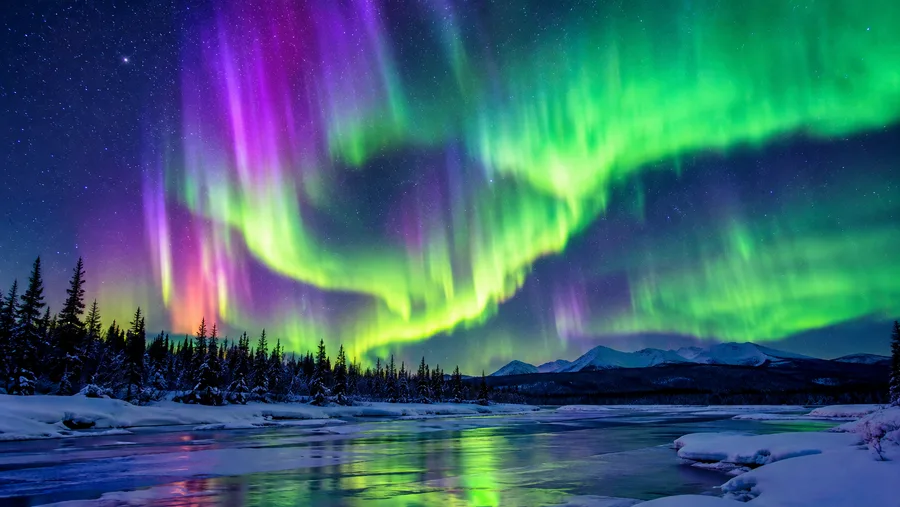
Do not limit your screen time to municipal limits. Watching an alaska aurora cam further north or east gives you a thirty-minute head start on incoming solar disturbances. Because the auroral oval expands southward as geomagnetic storms gain strength, cameras up in Coldfoot or near Bettles often detect brightening long before feeds in the Tanana Valley catch on.
If you see a wide, energetic curtain on an alaska northern lights live cam perched in the Brooks Range, start putting on your outer layers in Fairbanks. The energy usually cascades south over the next hour. Conversely, if an alaska aurora webcam along the Arctic Coast shows quiet skies with only drifting green fuzz, you probably have time to make another cup of coffee before heading out into the dark.
Note: Most webcams across the Interior operate exclusively between late August and mid-April. During summer months, midnight sunlight drowns out the sensors completely, so feeds are powered down for maintenance until autumn frost returns.
Down south in Anchorage or Talkeetna, cameras rarely catch quiet auroras due to lower latitude and coastal moisture. That makes Interior setups distinct. An aurora live camera fairbanks stream captures activity even during a Kp 1 lull because the city sits directly underneath the statistical auroral oval. You do not need a massive solar storm to see action here; ordinary background solar wind is often enough.
Book your fairbanks northern lights experience:
Using an Aurora Webcam Fairbanks Live Stream in the Field
Sitting in a warm vehicle while refreshing feeds requires a little technique. Lithium phone batteries drop from eighty percent to zero in ten minutes when exposed to sub-zero temperatures, so do not hold your device out the window while checking feeds. Keep your phone inside an inner jacket pocket near body heat, and use a dedicated car charger rather than relying on battery power alone.
Remember that the camera view might look slightly cleaner than what your eyes see right away. High-sensitivity sensors gather photons over seconds, creating vibrant green displays on screen. If you check an alaska northern lights webcam and see vivid color, step outside and let your pupils dilate for a full fifteen minutes before deciding the camera was exaggerating. For more guidance on training your vision and setting up night shots, our Fairbanks Northern Lights viewing guide breaks down practical visual tracking.
- Refresh often: Most northern lights cam fairbanks setups do not push live video automatically; manual browser refreshes pull the latest cached frame.
- Watch the time stamps: Extreme cold occasionally freezes a camera computer, leaving an old image from 11:15 PM sitting on the page until morning. Always verify the recorded clock.
- Check lens conditions: Rime frost frequently builds up on heated domes during quick weather transitions, creating an eerie white blur that looks deceptively like clouds.
- Compare multiple angles: Cross-reference a valley cam with a ridge cam to confirm whether darkness is cloud cover or just quiet space weather.
When you are out in the field, watching feeds also helps you make safety decisions. If three cameras across the region suddenly turn into white blur sheets, a weather front with wind and blowing snow is rolling in. Driving winding gravel roads like the Elliott Highway in poor visibility is risky business, and knowing that the sky is shut down allows you to turn around before roads get treacherous.
Interpreting What You See on Live Alaska Aurora Cameras
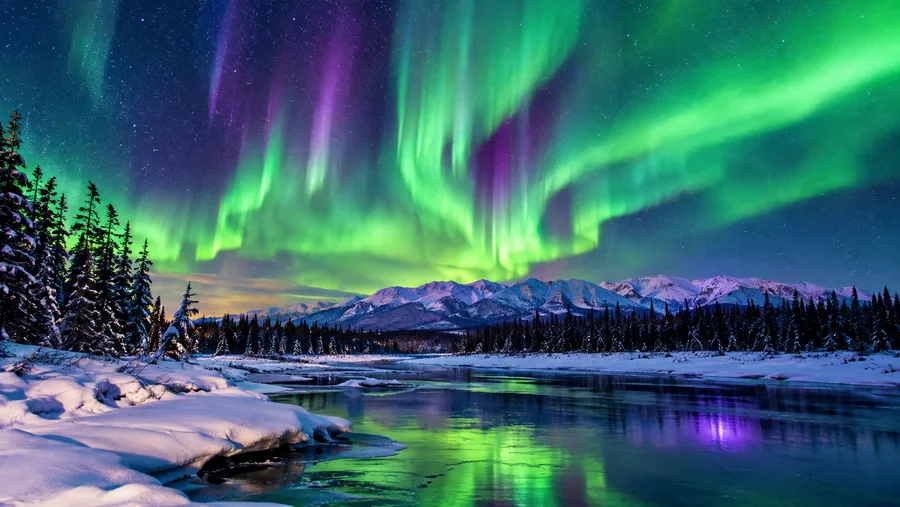
It takes practice to read an aurora borealis live cam alaska output accurately. Beginners often mistake thin, illuminated cirrus clouds for auroral ribbons. The dead giveaway is motion and color. Aurora light glows from within, casting a signature pale green or faint violet hue that sensors register clearly. Clouds, on the other hand, look dirty or gray, often backlit by Fairbanks street lamps or the moon.
Pay attention to the structure on the screen. A static, featureless band stretching east to west usually signals a quiet phase. You can relax inside for a while. But when that band develops vertical ribbing or starts curling into zig-zags along the bottom edge, a substorm is brewing. Within ten minutes, that calm ribbon can erupt into an all-sky breakup that dances across every quadrant of the compass.
Sensors also show light pollution distinctly. A yellow or amber dome on the southern horizon of an all-sky camera is simply the reflection of Fairbanks city lights bouncing off the lower atmosphere. Do not confuse that amber glow with auroral activity. True auroral displays emerge from higher up, dominating the northern sky and overhead zenith with sharp, electric tones.
Frequently Asked Questions about fairbanks northern lights live cam
What is the best time of night to watch Fairbanks aurora cams?
The sweet spot runs between 10:00 PM and 3:00 AM local Alaska time, with peak activity commonly landing around magnetic midnight, which occurs near 1:30 AM in Fairbanks.
Why does the aurora look bright green on the webcam but faint to my eyes?
Webcams use long exposures and high digital sensor sensitivity to gather light over multiple seconds, whereas human eyes rely on low-light rod cells that struggle to detect color in darkness.
Do Fairbanks live aurora cams run during the summer?
No, almost all public cameras shut down between early May and mid-August because continuous daylight prevents the sensors from registering northern lights.
Can you see the aurora on webcams if it is cloudy?
Thick cloud cover blocks the light completely, but during thin or patchy cloud conditions you can often spot green radiance glowing behind the cloud edges on sensitive lenses.
Quick Reference
- Peak viewing hours: 10:00 PM to 3:00 AM AST
- Active camera season: late August through mid-April
- Geophysical Institute feed updates every 30-60 seconds
- Magnetic midnight in Fairbanks occurs around 1:30 AM
Book your fairbanks northern lights experience:
My Take
Technology has taken a lot of the frustrating guesswork out of chasing the northern lights, but a camera lens remains a tool rather than a replacement for being out there. Use these feeds to make smart calls about when to zip your parka, when to drive up a ridge, and when to get some sleep. Once the feeds show that green line starting to warp and coil, put your phone away, step out into the cold, and look up with your own eyes.
Read more about fairbanks northern lights.